

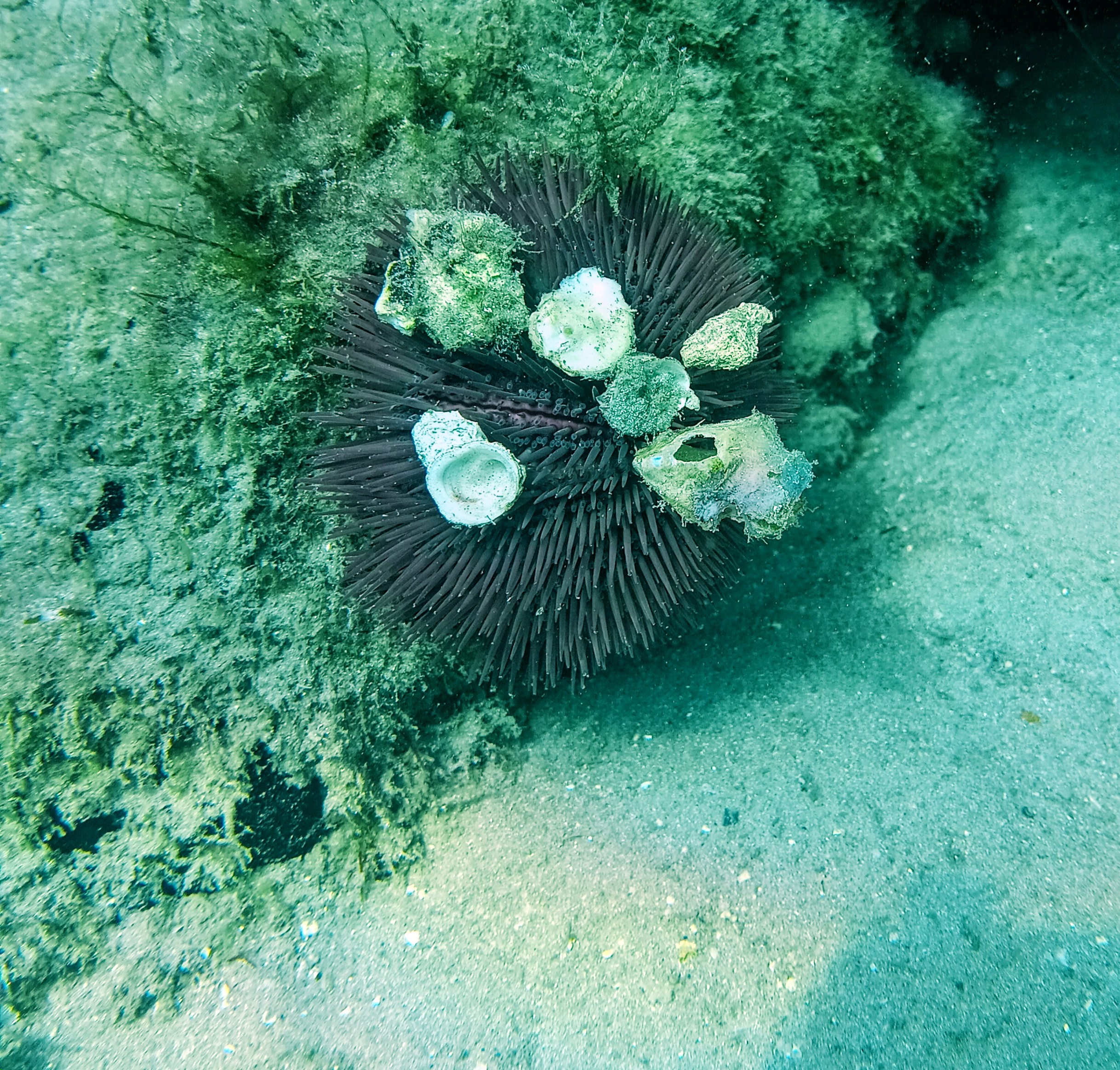
Creature Feature: The Sea Urchin with a Hat
One of my favorite sights on a slow dive at Blue Heron Bridge isn’t a rare fish or a spectacular octopus—it’s a humble sea urchin wearing a hat.
If you’ve never stopped to watch one, you’re missing one of nature’s most entertaining little engineers.
At first glance, they look like a pile of shells and rubble. Look closer, and you’ll realize the shells are moving. Slowly but deliberately, the sea urchin crawls across the bottom, carrying its collection of treasures on its back like a tiny underwater backpack.
Those “hats” aren’t accidental. The urchin carefully collects shells, coral fragments, and bits of algae with hundreds of tube feet and places them on top of its body. Marine biologists call this covering behavior.
Why go through all that effort?
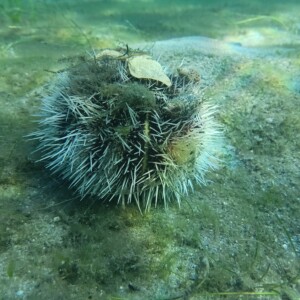
The extra covering helps camouflage the urchin from hungry predators, provides protection from Florida’s bright sunlight in shallow water, and may even shield it from wave action and floating debris. It’s a remarkably clever survival strategy for an animal with no brain.
Sea urchins are also one of the reef’s unsung heroes. As they move across the reef, they constantly graze on algae. Without grazers like sea urchins and herbivorous fish, algae can quickly overgrow corals, reducing the space and sunlight corals need to survive. Their constant mowing helps keep the reef in balance, making them an important part of a healthy marine ecosystem. When I see sea urchins during a dive, I know I’m looking at a reef that is functioning the way nature intended.
Watching one move is surprisingly relaxing. Every few moments you’ll notice a shell shift position or a new piece of rubble get added to the collection. It’s slow-motion construction work, carried out with incredible precision.
This is exactly why I encourage divers to slow down.
Many divers race from one end of the dive to the other, checking off fish as they go. But when you become a calm, confident diver with good buoyancy control, you begin to notice the small stories happening all around you.
A blenny cleaning its home.
A basket star unfurling its arms after sunset.
A sand dollar walking across the bottom on hundreds of tiny tube feet.
And a sea urchin proudly wearing its little hat .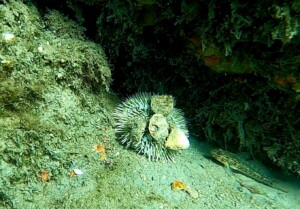
The ocean doesn’t always reveal its best secrets to the fastest divers. Sometimes the most memorable encounters happen when you simply stop, hover, and watch.
Take your time. Don’t be a reef jogger. The underwater world has countless stories to tell—you just have to slow down enough to see them.