

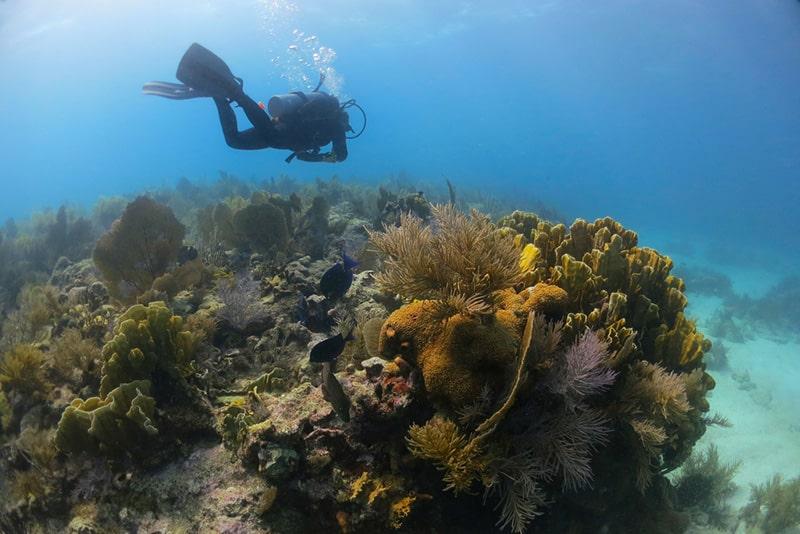
Don’t Be a Reef Jogger
People on land: “Why do you spend so much on diving?”
Me, after spending 47 minutes staring at one weird little fish: “Worth every penny.”
I’ll admit it—I am absolutely one of those divers.
I don’t need to swim a mile or see a dozen sharks to have an incredible dive. Give me a healthy reef, good buoyancy, and time.
Lots of time.
I’ll happily hover a few inches above the bottom watching a sea urchin slowly march across the reef wearing its collection of shells and algae like little hats.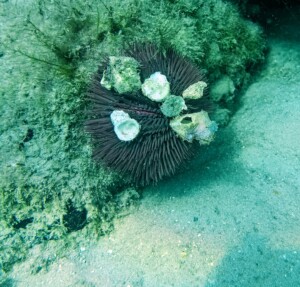
I’ll spend ten minutes watching a blenny peek out of its hole, grab a mouthful of gravel, spit it outside, disappear, and repeat the process over and over as it keeps its tiny home perfectly maintained. It’s basically underwater housekeeping.
Sand dollars? Most people think they’re just pretty souvenirs washed up on the beach.
They’re actually living animals with thousands of tiny tube feet underneath, slowly crawling across the sand. Watching one move is surprisingly mesmerizing.
One of my favorite sights happens after sunset.
During a night dive, basket stars unfold from a tight little ball into an intricate network of branching arms that stretch into the current, patiently collecting food drifting by. If you’ve never seen one open up, you’re missing one of nature’s most remarkable transformations.
These aren’t the moments you’ll find if you’re racing around the reef.
Unfortunately, many divers become what I jokingly call reef joggers. They swim from one end of the dive site to the other, checking off landmarks while completely missing the tiny dramas unfolding just inches away.
Marine life has spent millions of years evolving to avoid being eaten. Fish hide. Crabs camouflage themselves. Octopus disappear in plain sight. Seahorses become algae. Frogfish become sponges.
The slower you move, the more the reef reveals itself.
Ironically, becoming a better diver often means seeing more while swimming less.
When you’re comfortable in the water—properly weighted, neutrally buoyant, breathing calmly—you stop thinking about diving and start observing. Instead of chasing the reef, you become part of it.
The animals relax, come back out, and go about their business as if you aren’t there.
That’s when the magic happens.
You’ll notice cleaner shrimp setting up shop. Gobies standing guard outside pistol shrimp burrows. Flamingo tongues grazing on sea fans. Tiny nudibranchs no bigger than your fingernail. A decorator crab proudly wearing its camouflage.
The ocean isn’t just about the big stuff.
Sometimes the smallest creatures tell the biggest stories.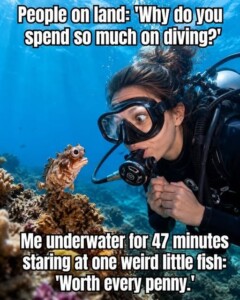
So the next time someone asks why divers spend so much money on equipment, travel, and training, just smile.
Because you know the truth.
Watching a little blenny spit gravel out of his front door for fifteen minutes?
Worth every penny.
The best divers aren’t the ones who cover the most distance. They’re the ones who notice the most.
Slow down, master your buoyancy, and let the ocean come to you.