
How to Prepare for Your NAUI Instructor Training Course (ITC)
Becoming a scuba instructor is a significant step. An Instructor Training Course isn’t simply another certification course—it is the beginning of the transition from being an experienced diver and dive leader to becoming an educator responsible for developing safe, knowledgeable, capable divers.
That transition requires preparation.
The ITC should not be where you begin preparing to become an instructor.
Ideally, you should arrive with your prerequisites complete, academics refreshed, equipment ready, diving and rescue skills sharp, and your attention focused on learning how to become an exceptional instructor.
Here are some of the things I recommend doing well before your ITC begins.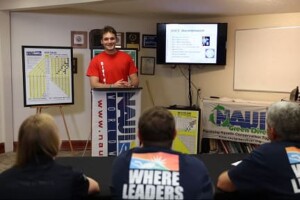
1. Verify Your Prerequisites
Start here.
Review the current NAUI prerequisites for the Instructor Training Course with your Course Director. Make sure you hold all required certifications and that anything requiring current status will remain current throughout the ITC.
Have copies or digital records of your certifications available. Complete required eLearning, paperwork, and other pre-course assignments ahead of time.
Don’t assume that a missing or expired prerequisite can simply be fixed once the ITC begins. Discovering a problem on Day One can bring your training to a stop before it gets started.
2. Get Your Medical Done Early
This deserves special emphasis because it is something that can derail an otherwise well-prepared candidate.
Do not wait until the last minute to schedule your diving physical.
Give yourself ample time to get an appointment and address anything your physician may want evaluated before providing clearance.
Make sure you are using the correct medical form and that it is completed properly. The required medical clearance must be signed by a licensed physician—not an RN or PA.
Also make sure the medical will remain valid throughout the ITC.
Get this out of the way early.
3. Go Back to the Books
You aren’t starting over, but there is probably material you haven’t looked at in quite some time.
Before your ITC, review your NAUI materials for:
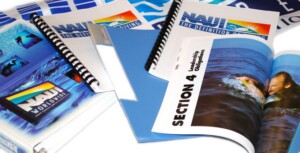 Open Water Scuba Diver
- Rescue Scuba Diver
- Master Scuba Diver
- Leadership
Refresh yourself on diving physics and physiology, decompression theory, dive planning and tables, equipment, the diving environment, navigation, rescue procedures, emergency management, nitrox, gas management, and other fundamental diving knowledge.
There’s an important difference now:
You’re no longer reviewing this material only to understand it yourself. You need to be able to explain it to someone else.
That is a very different level of understanding.
4. Prepare for the Written Examination
Don’t plan on studying for the instructor examination during the ITC.
Start early.
Work some physics problems. Review physiology. Get your dive tables out and use them. Review dive planning and decompression concepts.
Most importantly, identify your weak areas.
If there’s something you don’t understand, now is the time to ask questions and work through it.
The objective shouldn’t be memorizing enough information to pass an examination. The objective is mastery.
5. Get Your Equipment Ready
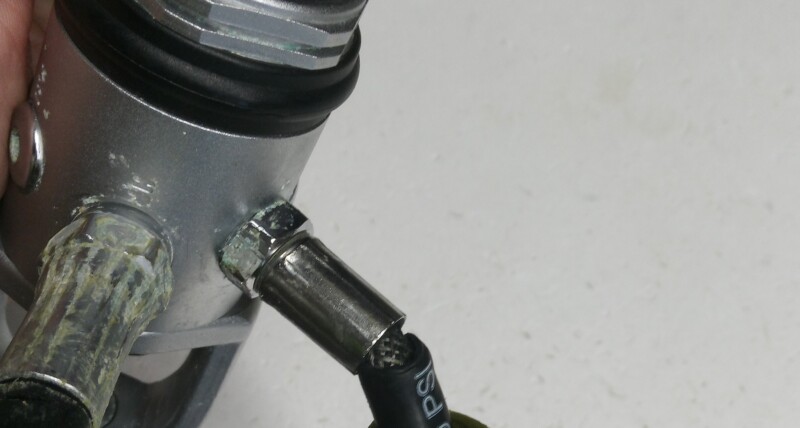
An instructor candidate should arrive with equipment that fits properly, functions correctly, and is appropriate for the diving you’ll be doing.
Go through everything before the ITC:
Your regulators, BC, computer, gauges, mask, snorkel, fins, exposure protection, boots, cutting devices, signaling equipment and other accessories should all be inspected and in good working order.
If equipment needs service, take care of it well ahead of time.
Check batteries, hoses, mouthpieces, straps, buckles and other wear items.
If you’re bringing cylinders, verify that they are within their required hydrostatic testing and visual inspection dates.
And this isn’t a particularly good time to completely change your equipment configuration. You should be comfortable and proficient with the equipment you’re using.
6. Bring Spares and a Save-a-Dive Kit
Things break.
A mask strap snaps. A computer battery dies. An O-ring leaks. A mouthpiece tears.
These are minor problems, but they can become major disruptions when you’re working on a limited pool reservation or a boat that leaves at a specific time.
Bring a reasonable save-a-dive kit with the common parts and tools necessary to handle routine problems.
Depending on your equipment, that might include O-rings, straps, mouthpieces, tie wraps, batteries, bolt snaps, clips and basic tools.
If you have backup critical equipment available, consider bringing it.
Part of becoming a dive professional is learning to anticipate problems rather than simply reacting to them.
7. Start Building Your Teaching Toolbox
You’re going to teach.
Start thinking about the resources that will help you do that effectively.
You might begin collecting:
- PowerPoint slides
- Photographs
- Diagrams
- Short videos
- Dive tables
- Charts and maps
- Equipment examples
- Cutaway or demonstration equipment
- Props and models
- Whiteboard materials
A good teaching aid can make a difficult concept much easier to understand.
But remember:
Teaching aids should support your presentation. They shouldn’t become your presentation.
If the projector quits, Wi-Fi disappears, or your laptop decides today is the day it doesn’t want to cooperate, you should still be able to teach.
8. Practice Teaching Before You Arrive
Knowing something and teaching it are two different skills.
Pick a few diving subjects and explain them out loud.
Try Boyle’s Law. Nitrogen narcosis. Proper weighting. Compass navigation. Gas management. Nitrox. Decompression sickness.
As you practice, ask yourself three questions:
What does my student need to know?
Why does it matter?
How will the student use this information while diving?
That starts moving you away from simply presenting information and toward actually teaching.
9. Sharpen Your Water Skills
Being able to perform a scuba skill isn’t the same as being able to demonstrate one.
Instructor-level demonstrations need to be deliberate, controlled and easy for a student to observe.
Practice your fundamental scuba skills. Slow them down. Think about what the student needs to see.
And do it while maintaining good buoyancy and trim.
You should also refresh your swimming, snorkeling, skin-diving, rescue, towing, diver-assist and emergency-management skills.
Don’t arrive hoping you’ll “knock the rust off” during the evaluation.
Arrive ready.
10. Make Room in Your Life for the ITC
Instructor training can involve long days.
Classroom sessions, confined-water work, open-water dives, presentations, evaluations, studying and preparing for the next day can all compete for your time.
Try to minimize unnecessary outside commitments during your ITC.
Plan transportation and lodging ahead of time. Get adequate sleep. Bring food, water, appropriate clothing, towels, sun protection and whatever else you’ll need to stay comfortable and focused.
Give yourself some time in the evenings for preparation.
Your ability to manage time is also part of becoming an instructor. Pools are reserved for specific times. Boats leave when they’re scheduled to leave. Students have jobs and families to get back to.
Learning when to expand a discussion—and when it’s time to stop talking and get underwater—is an important instructional skill.
11. Come Prepared to Learn
Finally, bring the right mindset.
You are not expected to walk into an ITC already knowing everything about being an instructor. If you did, there wouldn’t be much reason for instructor training.
You should expect feedback.
You should expect corrections.
You should expect to repeat things.
Some presentations will go well. Some won’t. Some skills may need additional work.
That’s part of the process.
Take notes. Ask questions. Help the other candidates. Pay attention to details. Accept coaching and take responsibility for your own preparation.
The objective isn’t simply to finish an ITC.
The objective is to become an instructor your future students deserve.
Preparation Makes Instructor Training Better
The more prepared you are when you arrive, the more time we can spend developing the skills that really matter: teaching, leadership, judgment, supervision, problem solving and evaluating divers.
My philosophy toward instructor development is much the same as my philosophy toward diver training:
Mastery matters more than simply completing the course.
Come prepared to work, practice, learn and improve.
We’ll take it from there.
Interested in Becoming a NAUI Instructor?
If you’re considering taking the next step into professional-level scuba instruction, I’d be happy to talk with you about the process, prerequisites, preparation and whether you’re ready to begin instructor training.
Neptune’s Splendor Scuba
32565 Lakeshore Dr.
Tavares, FL 32778
Phone: 352-508-7384
Email: jeff@neptunessplendor.com
Website: www.neptunessplendor.com
Exceptional experiences through exceptional training.
Download the Checklist NAUI_ITC_Preparation_Guide_Neptunes_Splendor_v2
Download our How to Prepare for Your NAUI Instructor Training Course PDF and use it as a pre-ITC preparation checklist.